
7 Marketing Automation Trends for 2026 That Help You Work


If you’ve been in marketing for any length of time, you’ve seen how much automation has changed. It used to mean scheduling a few follow-up emails or tracking leads. Now, it’s the engine that runs entire customer journeys. In 2026, automation isn’t just about saving time; it’s about building trust, creating better experiences, and helping you stay connected in smarter ways.
This guide covers the top automation trends shaping how teams work today. Think of it as a practical roadmap for making automation feel personal, intuitive, and actually helpful, for both you and your customers.

What Marketing Automation Really Means in 2026
Here’s the truth: Marketing automation isn’t just a collection of tools. It’s how modern businesses stay in sync. It connects marketing, sales, and customer service so you can focus on meaningful work instead of repetitive tasks.
When it’s working well, automation helps teams:
- Respond to leads up to 65% faster
- Drive 40% higher conversion rates
- Retain customers 2.5x longer
According to Pulse CRM data, this success doesn’t come from sending more messages. It comes from sending better ones, messages that hit the right note at the right moment.
1. Hyper-Personalization at Scale
The days of “Hi, [First Name]” being enough are long gone. Today, personalization means understanding intent, anticipating needs, and responding like a real person who’s paying attention.
How it works:
- Group leads by behavior and journey stage, not just demographics.
- Adapt your content based on their actions and interests.
- Follow up when it makes sense, not when an automation timer says so.
If someone keeps visiting your pricing page, don’t hit them with another generic offer. Send something useful, like a comparison guide or a short “how to choose” breakdown. That kind of personalized follow-up feels human, not pushy.
A McKinsey study found that companies that nail personalization generate 40% more revenue than those that don’t. Why? Because people pay attention when they feel understood.
Start small. Pick one or two touchpoints, maybe your post-demo follow-up or your abandoned cart message, and make them feel like they came from a person, not a system. As you grow, a marketing automation platform can help you scale that same natural experience across channels.
The goal here isn’t to impress people with fancy workflows. It’s to create moments that feel relevant, thoughtful, and real.
After you’ve built personalization into your strategy, the next step is giving it structure, making sure every interaction leads somewhere meaningful.
2. Funnel-Optimized Content Journeys
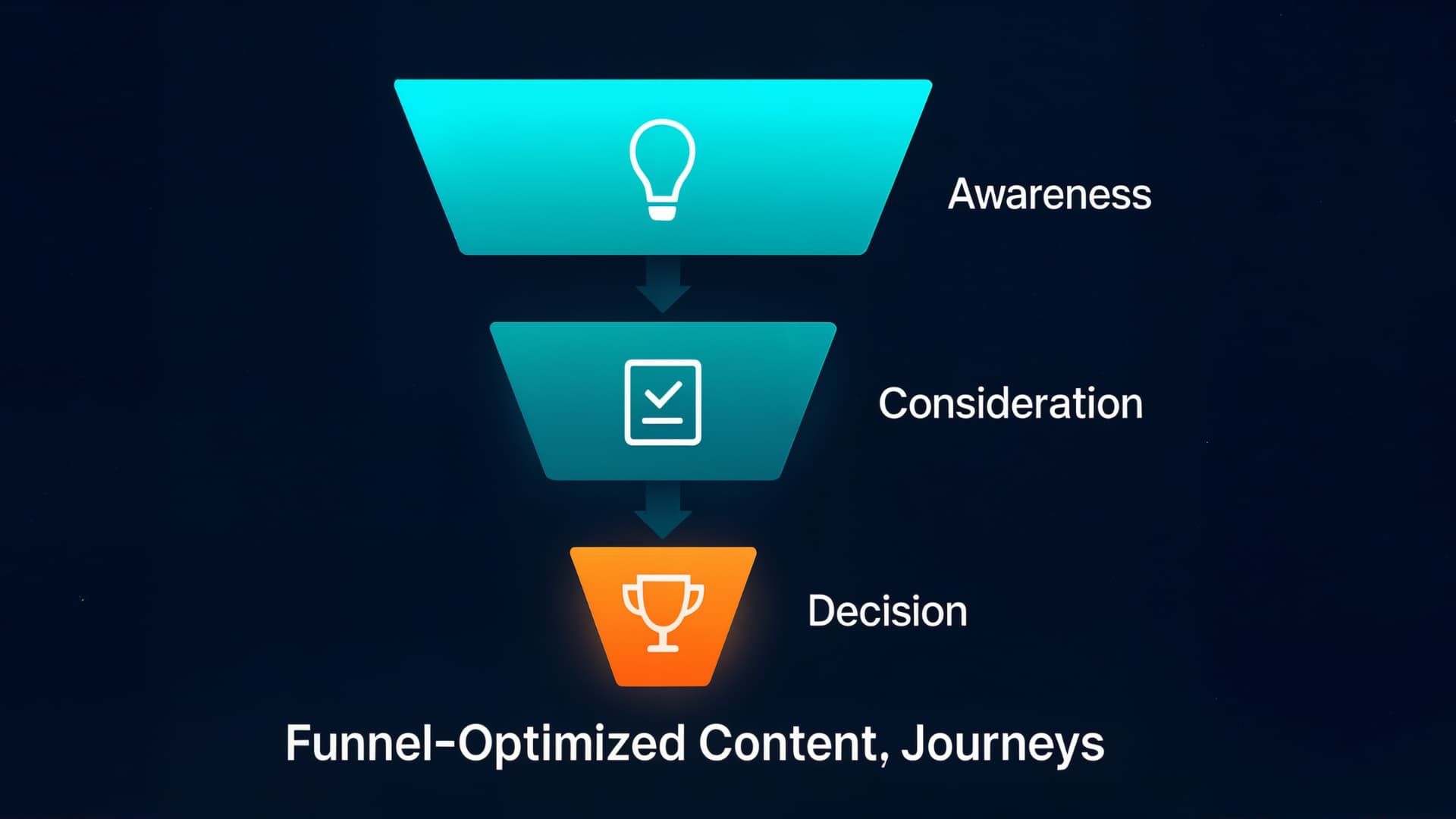
Let’s be honest, most buyers don’t convert after one touchpoint. That’s where funnel-optimized content comes in. It’s not about blasting messages; it’s about guiding people through a process that feels helpful from start to finish.
When your content matches the buyer’s mindset, it builds momentum. It helps people understand, trust, and act in that order. Mapping your sales funnel ensures you’re not rushing the relationship.
This matters because most people drop off when content feels out of sync. Using analytics from your reporting tools helps you see where that happens. Fix those weak points, and your automation starts to feel less like marketing and more like guidance.
A strong funnel strategy isn’t just about what content you send; it’s about how each piece connects. For instance, if a lead downloads a guide on workflow efficiency, your next automated email could share a short checklist or quick-start resource instead of pushing a product. This keeps the journey cohesive and logical, not forced.
According to a Content Marketing Institute study, aligning content with each stage of the funnel can boost conversion rates by as much as 70%. That’s a strong payoff for simply showing up with the right message at the right moment.
To make this actionable, revisit your funnel once a quarter. Review each stage, the content it includes, and the results it’s driving. Adjusting your messaging slightly to match audience behavior can make the difference between a campaign that fizzles and one that flows naturally from awareness to decision.
Once you’ve got your content journey mapped, the next question is how to make those experiences feel two-way, not one-sided.
3. Conversational Marketing and Smart Chatbots
You’ve probably chatted with a bot before, maybe to book an appointment or get support. The best ones don’t feel robotic. They sound human, respond fast, and actually help.
Modern chatbots do more than answer FAQs. They capture data, qualify leads, and sync with your CRM in real time. That means you always have context for future conversations.
What smart chatbots can do for you:
- Keep conversations natural and relevant.
- Automatically tag or segment leads based on questions.
- Trigger helpful follow-ups without missing a beat.
When you design chatbot flows, think like a customer. If someone asks about pricing, don’t jump straight to “Book a demo.” Offer a helpful overview or link to FAQs first. Build trust before you ask for anything.
When chat is integrated into your broader customer engagement strategy, it becomes part of a bigger conversation that feels consistent, not fragmented.
Once you’ve built that real-time connection, the next challenge is keeping it. That’s where smart retention comes into play.

4. Value-Driven Retargeting and Retention
Keeping customers is where real growth happens. With third-party cookies disappearing, zero-party data, the information people willingly share, is becoming the foundation of smarter retargeting.
Here’s how to use it well:
- Send post-purchase tips or templates that help people get more value.
- Automate loyalty messages tied to milestones.
- Reach back out to inactive users with something genuinely useful.
According to Harvard Business Review, increasing retention by just 5% can raise profits by 25 to 95%. That’s because happy customers spend more, refer more, and cost less to serve.
Think of retention as an ongoing conversation, not a campaign. Celebrate small wins, ask for feedback, and check in before customers drift away. Smart automation can flag red signals, like fewer logins or unopened emails, and prompt timely, thoughtful outreach.
When you build this into your customer lifecycle management, you stop playing catch-up and start creating loyalty by design.
The next step is taking that same data and using it to predict what your customers will want before they even ask.

5. Predictive Automation and AI Insights
This is where marketing starts to feel like magic, except it’s powered by data. Predictive automation uses machine learning to anticipate what’s coming next so you can act before an opportunity slips away.
Here’s what it helps you do:
- Spot high-intent leads early.
- Time your outreach for when people are most engaged.
- Learn from every campaign and adjust automatically.
Gartner reports that over 60% of marketing leaders are investing in predictive analytics to improve accuracy and ROI. It’s quickly becoming the standard for forward-thinking teams.
The real value isn’t the technology, it’s the insight. Predictive systems can signal when someone’s ready to buy, but it’s up to you to reach out naturally. Maybe that’s a short follow-up email or a quick personalized demo link. Whatever the touchpoint, timing is everything.
Tie these insights into your reporting to track what’s working and what’s not. The more you learn, the smarter your system becomes. Over time, it’s like having a teammate who quietly handles the timing while you focus on the message.
Once your automation can predict what’s next, it’s time to make sure the experience feels seamless across every channel.
6. Cross-Channel Automation and Experience Syncing
Once you email a customer, they see a Facebook ad, then get a text, and every message sounds different. That disconnect kills consistency.
Cross-channel automation fixes that by syncing everything behind the scenes. Whether it’s email, SMS, or chat, every message should tell the same story.
Here’s how to get it right:
- Keep your CRM as your main data source.
- Link your tools so they talk to each other.
- Use automation rules to control frequency and avoid overlap.
Forrester Research found that businesses with unified cross-channel efforts see up to 35% higher retention and stronger brand recall. Consistency builds credibility, and credibility builds trust.
The good news is, this doesn’t have to be complicated. Start by mapping where your audience interacts with you. Spot the overlaps and fill the gaps. Then set clear priorities for when and how to follow up.
When everything syncs, your communication feels natural, not like a flood of messages from disconnected teams.
Once your systems are connected, the final step is keeping them sharp. That’s where continuous testing comes in.
7. Continuous Experimentation and Adaptive Automation
Automation isn’t a one-and-done project. It’s a living system that learns as you go. The teams that get the best results are the ones who keep testing, adjusting, and evolving.
Here’s how to keep growing:
- Test your CTAs, subject lines, and visuals regularly.
- Keep an eye on your reporting dashboard to spot trends.
- Use AI insights to roll out small improvements automatically.
An Adobe report found that companies that experiment continuously see up to 30% higher conversion rates. That’s not luck, it’s consistency and curiosity.
Start simple. Test two email headlines or a different button color. Small tweaks can reveal big insights about what your audience prefers. Each experiment adds to a growing base of knowledge that keeps your marketing relevant and effective.
When you treat automation as something that evolves, not something you finish, it stays aligned with your audience. That’s how you stay ahead.

